
Agave, Atole & the Road to Guanajuato
Guadalajara → Tequila → San Miguel de Allende → Guanajuato
Some trips are built around landmarks. This one seemed to organize itself around what I ate, drank and stumbled into along the way.
At the end of 2024, I travelled through central Mexico from Guadalajara to Tequila, San Miguel de Allende and Guanajuato — a route of blue agave fields, colonial cities, roadside food, thermal pools, mole, mezcal, wine and more than a few unexpected moments.
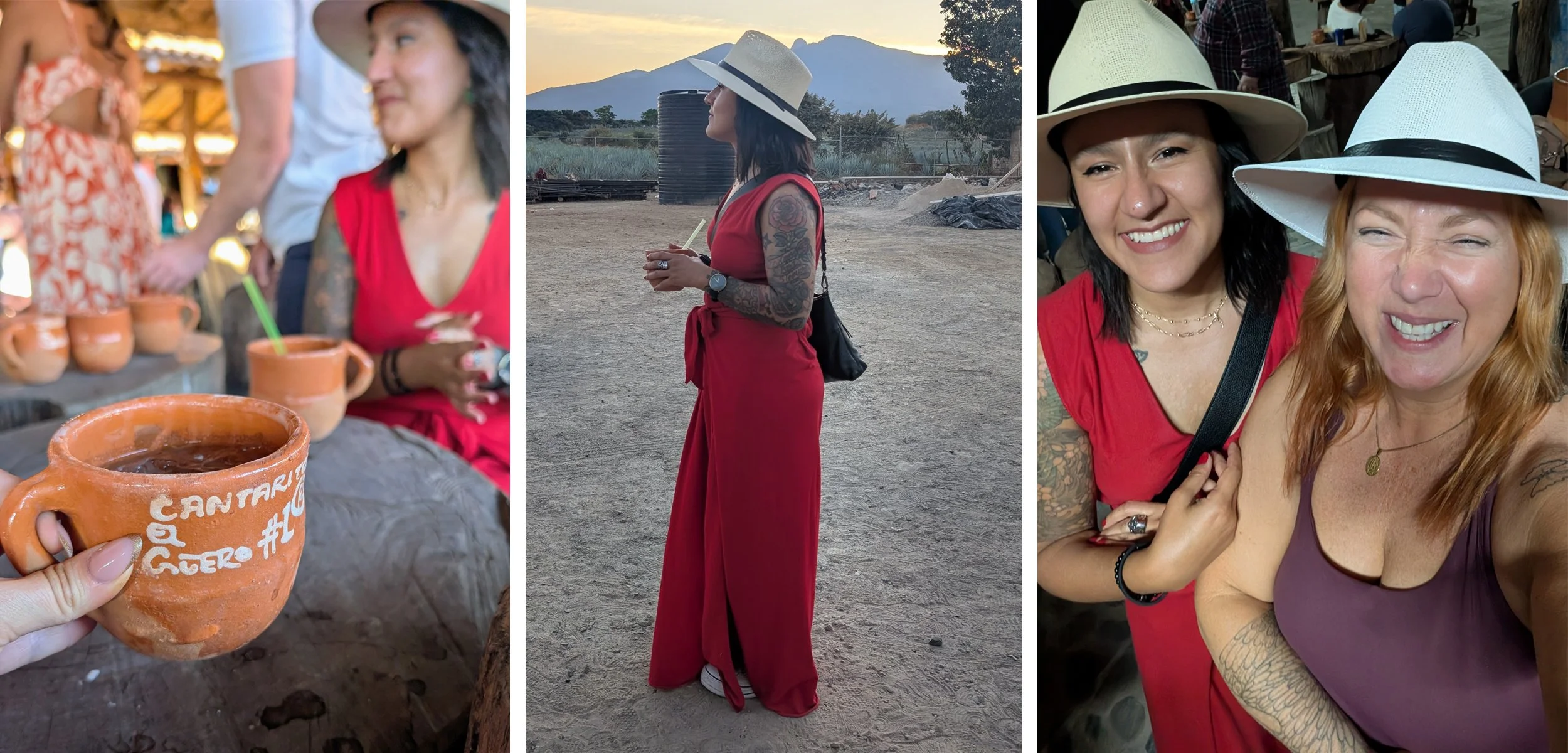
Guadalajara + Tequila
I started in Guadalajara at Casa Sabina, a boutique hostel that felt more like staying in the home of a very creative friend. There was a café downstairs, a tattoo studio next door and a little flower shop bringing colour into the courtyard. It was relaxed, social and just a little bit cool.
Breakfast the next morning was at DANTE Brunch, where I ordered chilaquiles divorciados con huevos with grilled panela.
The “divorced” chilaquiles arrive divided between two sauces — typically a red salsa on one side and green on the other. Spicy, tangy, creamy and comforting, especially with the warm panela alongside.
Then came tequila.
I joined Nmad Experiences for a day exploring the region, beginning at Tequila Selecto Distillery. We walked through different approaches to tequila production, from more traditional techniques through to larger-scale methods, tasting along the way.
One of the surprises for me was cristalino: aged tequila that has been filtered until clear. Smooth, polished and completely different from what its appearance suggests.
From the distillery, we headed into the agave fields.
And then someone handed me a scorpion shot.
Crunchy. Slightly terrifying. Surprisingly fine.
The day ended in Tequila with cantaritos: tequila mixed with fresh citrus and soda, traditionally served in clay cups.
It was loud in the best possible way. Music spilling out into the street. Dancing. Vendors weaving through crowds. Mariachi. Conversations overlapping from every direction.
Exactly the kind of beautiful sensory overload Mexico does so well.
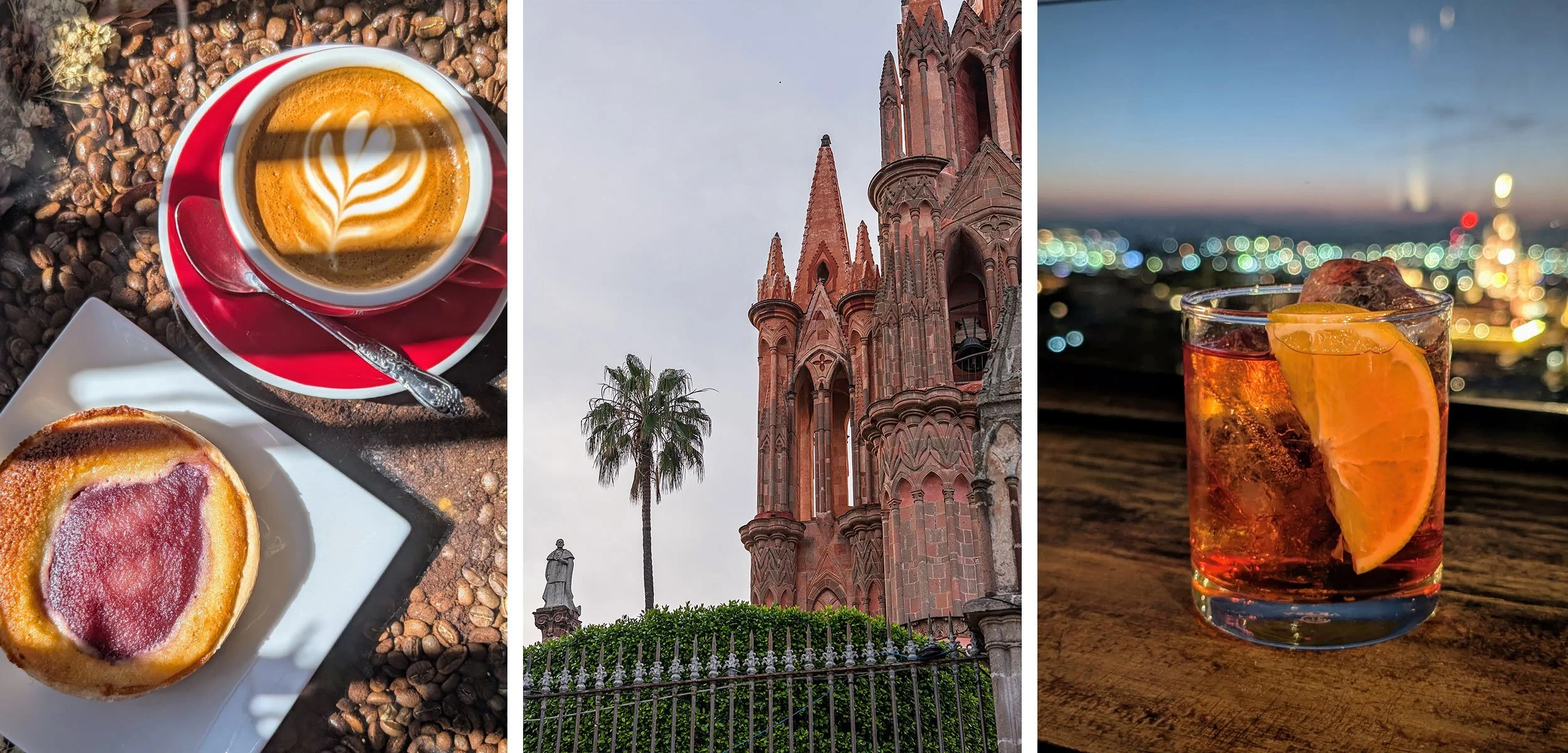
New Year in San Miguel de Allende
From Guadalajara, I travelled by bus to San Miguel de Allende.
Colourful facades, steep cobblestone streets, church bells and one spectacular doorway after another — it’s an easy city to photograph.
I arrived on New Year’s Eve but, after a long travel day, skipped the big celebration. Dinner, a movie and fireworks from the rooftop of my accommodation felt just about perfect.
The next morning I wandered through Lavaderos del Chorro and Parque Benito Juárez, stopping for coffee and pastries along the way.
Later, I headed to Antonia Bistro for dinner as the sun dropped over the city. From the terrace, the buildings shifted into warm gold and terracotta as evening settled in.
Before leaving San Miguel, I spent a morning soaking at La Gruta, a thermal spring outside the city.
Warm mineral water, caves, sunshine — and, unexpectedly, a very enthusiastic water Zumba class happening nearby.
One of those travel moments that could never have been planned and is much better because of it.
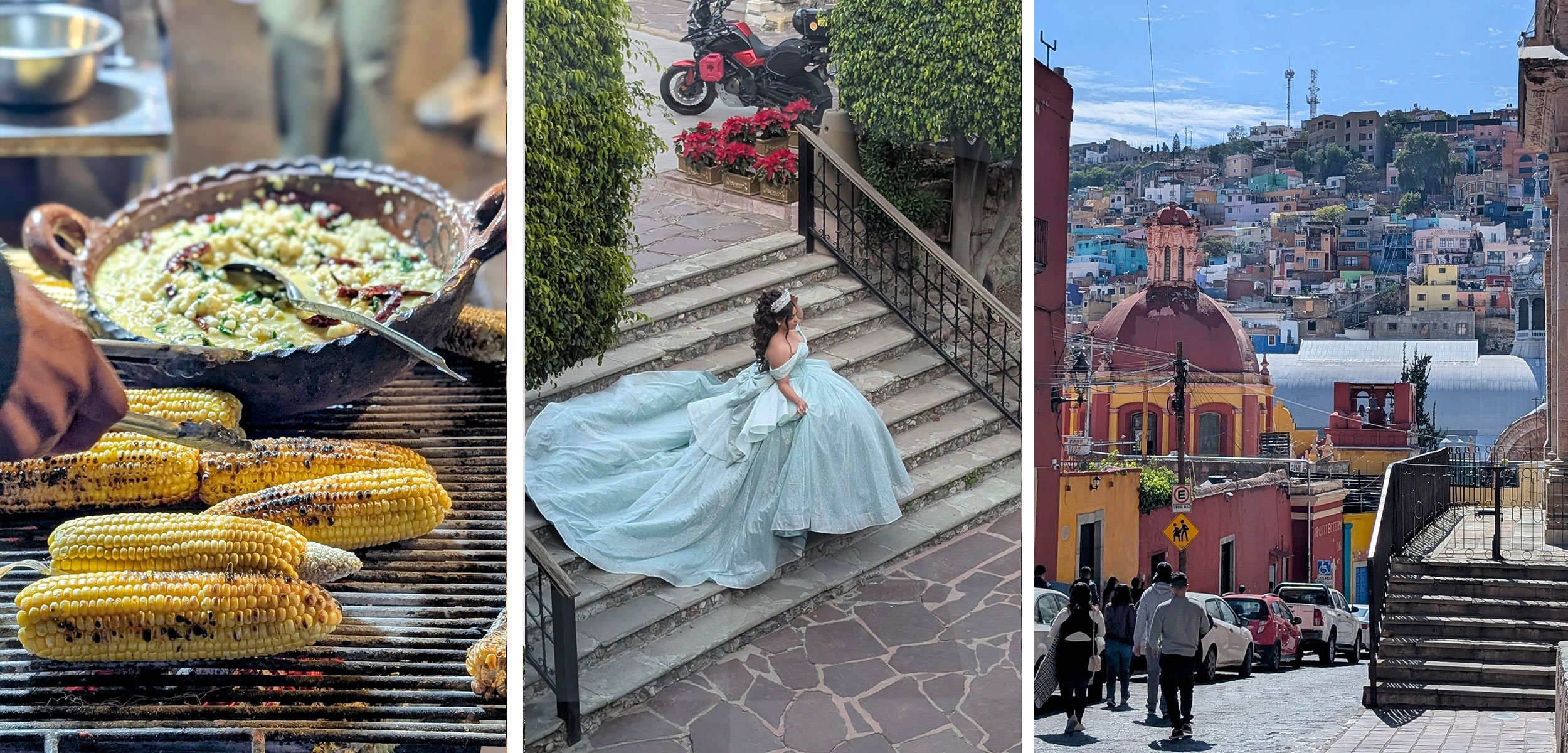
Guanajuato, You Stole My Heart
Guanajuato was next.
I stayed at Hotel Castillo de Santa Cecilia, an eccentric castle-like hotel that feels as though it landed in Mexico from a completely different century.
The following day I explored the city from above and below: the view from Mirador de Rayas, Guanajuato's underground streets, Teatro Juárez and the Alhóndiga de Granaditas, one of the important sites in the story of Mexico's independence. Walking through its halls, I could feel history alive in every corner.
But one of my favourite memories came after dark. I took the funicular up toward the Monumento al Pípila and watched the city glow below — tightly packed buildings climbing the hillsides, washed in gold against the night.
And instead of heading to a restaurant, I ate outside. Grilled elote with mayo and chile. A hot cup of atole. A tamal from a street vendor. Every bite tasted like tradition.
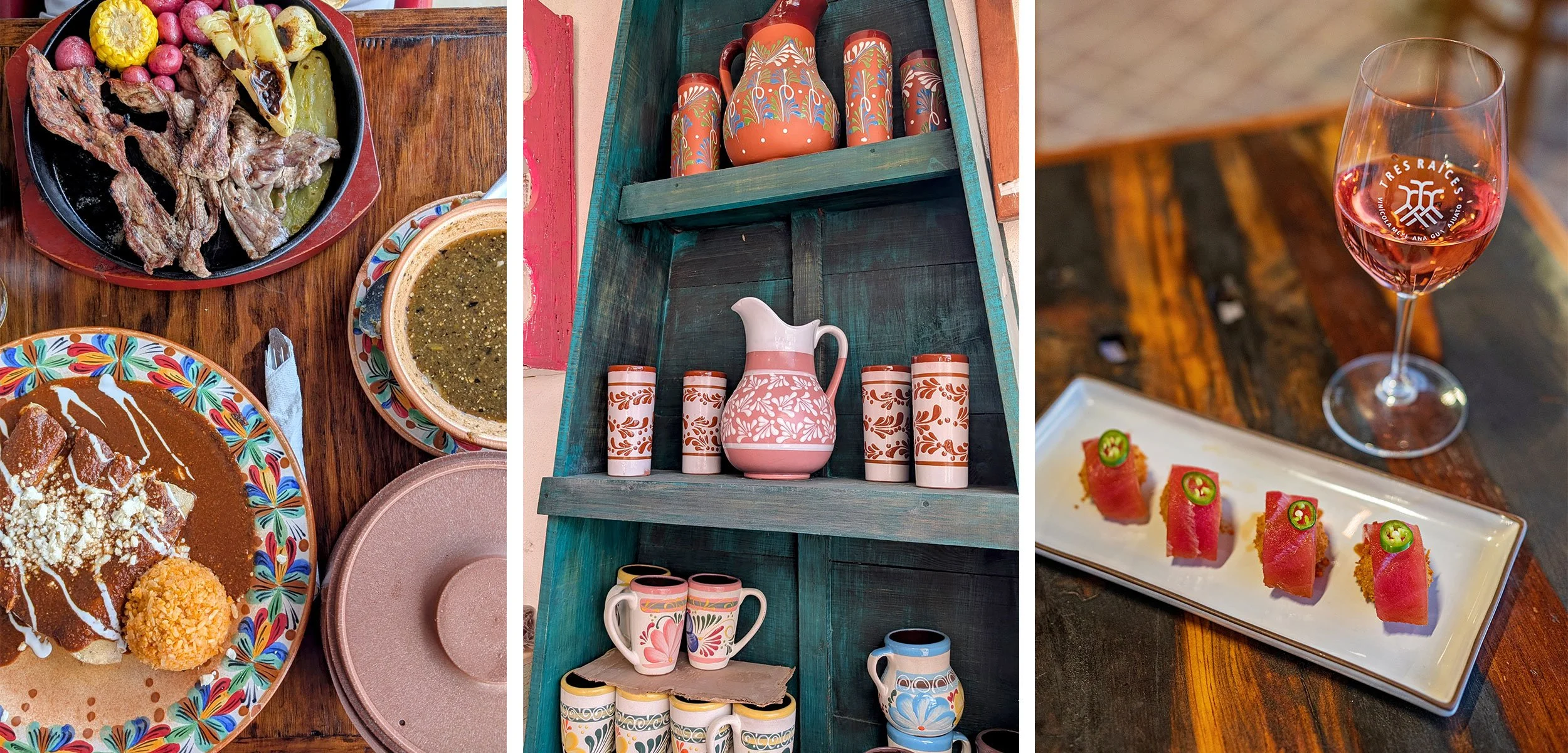
Strawberries, Mole + the Independence Route
From Guanajuato, I continued through the surrounding region.
In Irapuato, a city famous for strawberries, I tried candied berries at Cristalita before stopping at Lindo Sinaloa for aguachile negro: shrimp, lime, chile and a dark, deeply savoury sauce.
On the road to Dolores Hidalgo, I stopped at Tras Lomita for enmoladas — tortillas filled with chicken, covered in rich mole and finished with cheese and sesame seeds. From there, I continued into Dolores Hidalgo, a town forever connected to the beginning of Mexico’s War of Independence and Miguel Hidalgo’s call to rebellion in 1810. The streets and markets added another layer to the stop, with brightly painted ceramics stacked in rows — bowls, plates and vessels covered in florals, geometric patterns and saturated colour. By late afternoon, the day shifted again, from history and pottery to wine.
At Tres Raíces, I finished with a sunset tasting overlooking the vineyard, accompanied by Iberian ham croquettes with kimchi — not exactly the pairing I had expected to find in Guanajuato, which was part of the fun.
One Last Walk
Before leaving Guanajuato, I wandered through the Callejón del Beso, the famously narrow alley attached to one of the city's great romantic legends.
Then it was back toward the coast and Nuevo Vallarta. After days of buses, cities, agave fields, museums, markets, street food and very full camera cards, the trip ended simply: a walk on the beach and an ice cream with a friend.
Looking back, what stays with me isn't one landmark. It's the grilled corn eaten above Guanajuato at night. The clay cantarito in my hand in Tequila. A plate divided neatly between red salsa and green. Painted ceramics stacked in Dolores Hidalgo. Warm water at La Gruta. Strawberries in Irapuato.
Food has a way of becoming a map. And this stretch of Mexico gave me plenty of reasons to keep following it.
